










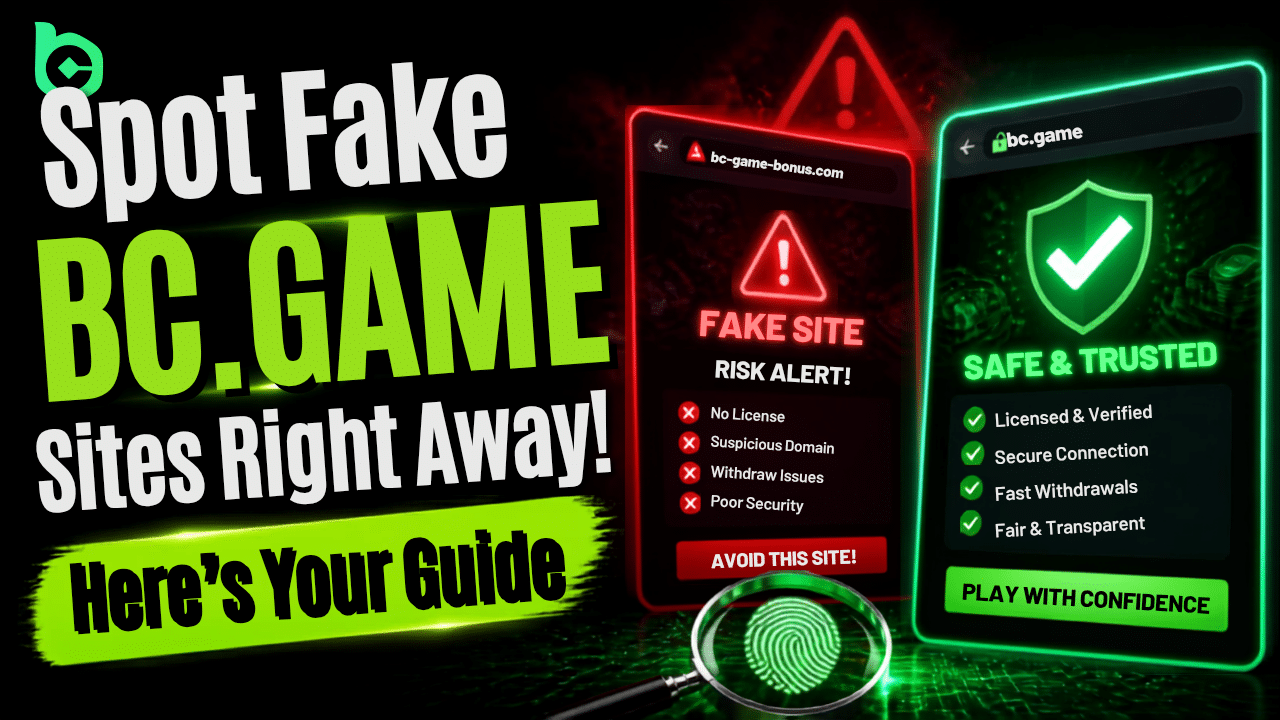
The internet has made online gaming more accessible than ever, but it’s also given criminals the chance to prey on users. Popular gaming platforms continue to flourish, and sometimes fraudulent websites appear next to them, aiming to look convincing enough to trick unwary users.
Of course, BC.GAME’s popularity has its share of imitators. Some fraudulent sites are designed to steal account credentials, while others try to steal your deposits or personal information. The trouble is that many of these sites might look quite close to the actual thing at first sight.
Luckily, if you know what to look for, finding a bogus site is typically easier. A few simple tests will help you avoid unnecessary risks and ensure you’re accessing the legitimate platform every time.
Start With the URL
One of the easiest and most effective ways to spot a bogus website is to take a close look at the URL.
Most scam sites don’t have fully separate website addresses. Instead, they typically make domains that look pretty much like the original. They may add a letter, change a letter, add a hyphen, or employ a variation that is easy to miss if you are not paying attention.
Which is why it’s crucial not to go directly to the login page. Please take a moment to glance at the address bar and make sure that you are on the right website. It’s a tiny thing that can save you a lot of headaches later.
Pay Attention to the Overall Quality of the Site
Scammers have gotten a lot better at duplicating website designs, but they tend to overlook the minor elements.
Look at how professional everything feels while you’re exploring a platform. “Are pages loading properly? Do the links operate as you expect? Is the writing natural-sounding? Other times it’s little things like broken graphics, obsolete material, poor grammar or inconsistent branding that will tell you that you’re dealing with a bogus site.
Obviously, not every problem with a website is a sign the site is a scam. Even genuine sites can have technological issues from time to time. The difference is that fake sites often show several warning indicators at the same time.
If it feels off or incomplete, believe that feeling and do more digging before you put in any personal details.
Look for Proper Security Features
It’s recommended to have a brief look at the site’s security measures before you enter your login details or make a deposit.
Most legal sites employ encrypted connections to secure user data. Usually you can see this via the padlock symbol that appears in your browser’s address bar. If you see a padlock, it doesn’t mean a site is legit, but if you don’t see one, you should definitely be alarmed.
You should also look at the security features that come with the platform itself. Good gaming sites often encourage account protection with things like email verification and two-factor authentication.
Scam sites are more concerned with looking legit on the surface than actually putting solid security procedures in place. Be cautious if you notice a platform has limited account security features or requests sensitive information in odd ways.
Security takes a minute to check, but it can save you the trouble of dealing with compromised accounts or lost assets later.
Be Skeptical of Promotions That Seem Unrealistic
Everyone loves a little extra bonus, and promotional offers are part of online gaming. But the scammers know this too, which is why they often employ inflated marketing to get attention.
A bogus site may claim big incentives, guaranteed profits, or bonuses that appear to be considerably superior to anything else on offer. The idea is simple. To create hype and get people to register or pay before they can use their critical thinking skills.
If you come across an offer that sounds too good to be true, stop and check it out. Check it against the promotions on official channels and see if the terms and conditions make sense.
Legit operators want players to know what they are selling. Scammers, in contrast, will often employ dazzling promises and a sense of urgency to compel people into hasty action.
If something seems too good to be true, it’s worth looking closely before you jump.
Don’t Rely on Random Links
Links published through unauthorized social media accounts, messaging apps, forums, emails, or online adverts can sometimes lead to bogus pages. Even if the link looks real, it’s always good to check where you are going before logging in.
If able, go directly to the platform via a trusted source or a stored bookmark. This simple habit can drastically lower the risks of arriving on a fraudulent website.
The more cautious you are about where you click, the harder it becomes for scammers to reach you.
A Few Extra Seconds Can Save a Lot of Trouble
Most fake BC.GAME sites depend on players moving too quickly. They count on people overlooking small details, trusting flashy promotions, or assuming that every site with a familiar logo must be legitimate.
The good news is that avoiding these scams usually doesn’t require technical expertise. By checking the URL, reviewing the site’s quality, verifying security features, and being cautious with promotions and links, you can spot many fake sites before they ever become a problem.