










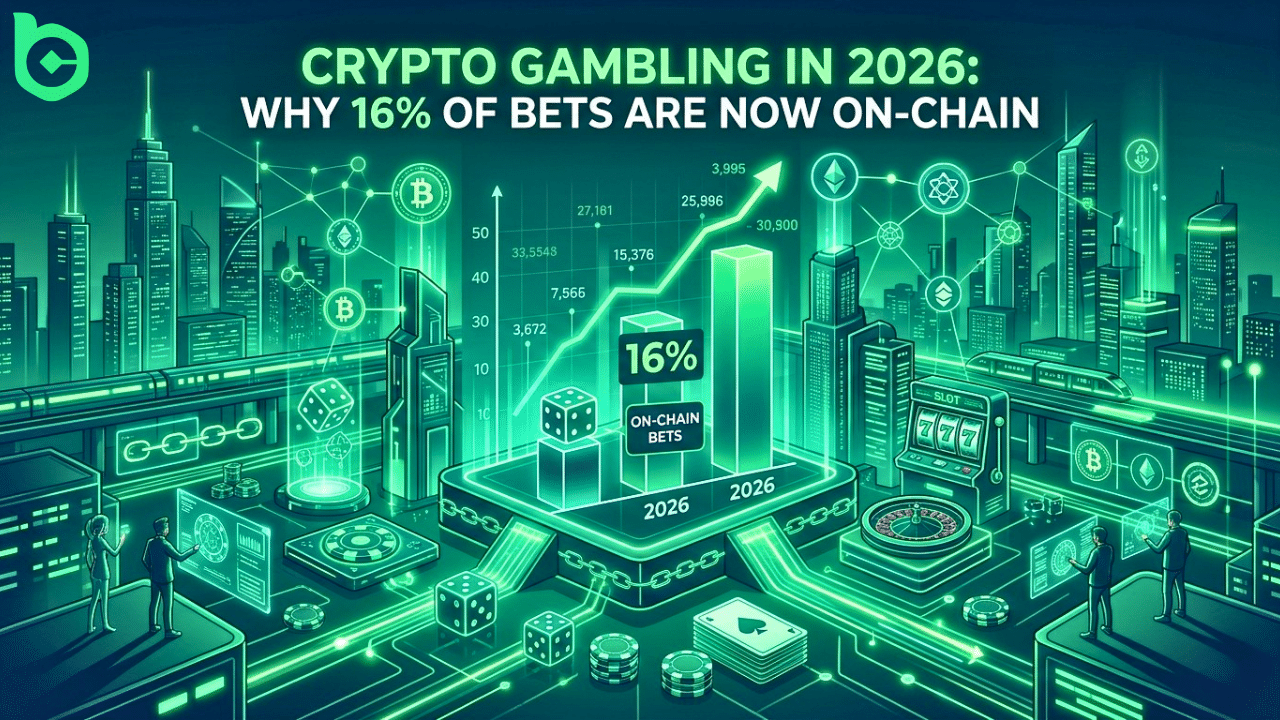
Crypto gaming isn’t just a side project for the gambling world anymore. It has grown up fast. In 2026, roughly 16% of all bets are happening entirely on-chain. That might sound like a niche statistic, but it actually signals a massive shift in how we think about betting. It shows that people are moving away from just “using crypto” and are moving toward a system that is actually built on the blockchain.
At first glance, 16% might look small. But when you dig into it, you see a bigger story. It isn’t just about growth; it’s about how platforms are changing. Players are starting to use these sites in much more direct ways. In 2026, crypto is no longer just a payment button at checkout. It is a complete rethink of how a gaming system should actually function.
A Structural Shift Beyond Simple Payments
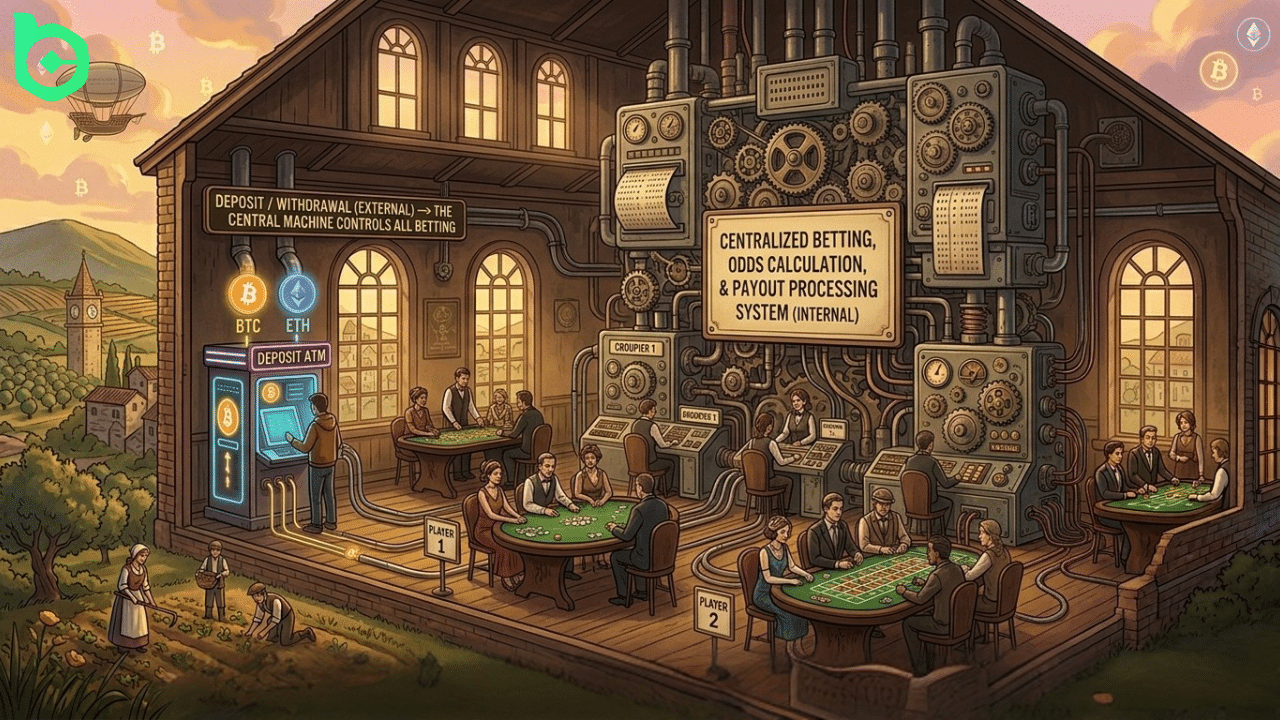
If you look back a few years, crypto gambling was pretty basic. Most sites just took your digital coins and converted them into their own internal points. You could deposit Bitcoin or Ethereum, but the actual games—the odds, the spins, and the payouts—happened inside a private, centralized server.
From your perspective as a player, it didn’t feel any different from a standard betting site. The only “crypto” part of the experience was how you moved your money in and out. The rest was a black box.
In 2026, that is changing. We are seeing platforms built directly on top of blockchain technology. Instead of a company running the show, “smart contracts” handle the heavy lifting. These contracts place the bets, execute the rounds, and handle the payouts automatically. There is no central office deciding who wins or when to pay out. The rules are set in stone in the code. You aren’t just trusting a brand anymore; you are using a system where the execution happens exactly as promised, every single time.
Transparency as the Real Driver
The biggest reason for this move to on-chain betting is transparency. This has been the biggest headache for online gaming for decades. If you’ve spent any time on these sites, you’ve probably had that nagging feeling: “Is this thing actually fair?”
In a traditional setup, almost everything happens behind the scenes. Even with “provably fair” tags, you still have to trust that the platform’s math is right and that they haven’t found a way to tilt the scales.
Everything changes when you move to an on-chain service. The blockchain keeps a public record of every transaction and every result. You don’t have to take the casino’s word for it because the evidence is right there. Since smart contracts set the rules before the game even starts, it is basically impossible for anyone to change the outcome after you’ve placed your bet.
For the average player, this isn’t just a tech feature. It’s a peace-of-mind feature. It takes the guesswork out of the equation. You know the rules, you see the execution, and you can verify the results yourself. That is a huge step forward for anyone who wants to be sure of how their games are being run.
Better Tools for a Better Experience
We can’t talk about 2026 without mentioning stablecoins. These have been a game-changer. In the past, players worried about their winnings losing value because of market swings. Now, you can bet using coins pegged to a steady value. This lets you focus on the game without worrying about the crypto market crashing in the middle of a session.
The tech has also caught up. Blockchain networks are faster and more efficient than they used to be. High-performance chains mean that payouts happen almost instantly. You no longer have to wait days for a withdrawal to clear. Plus, many systems now allow you to use multiple different chains, so you aren’t limited to just one network. You can pick the one that works best for you at that moment.
All of these small improvements make the whole experience easier to get into. This ease of use is a major reason why the on-chain sector is seeing steady, consistent growth.
Why Adoption Sits at 16%
So, why isn’t everyone betting on-chain yet? The biggest hurdle is simply what people are used to. Traditional platforms are familiar, and for many, that’s enough of a reason to stay put. Blockchain can still feel intimidating if you aren’t a “tech person.”
There are also technical trade-offs. Sometimes networks get congested, fees go up, or speeds become inconsistent. These are the growing pains of a new system. On top of that, governments are still catching up with regulations. This has led some platforms to use “hybrid” models—mixing on-chain transparency with traditional compliance tools.
While these hybrid sites might feel safer to some, they aren’t the “pure” decentralized experience. But even with these hurdles, the trend is clear. Players want more control and more honesty. As the tech gets simpler, that 16% will likely keep climbing. People are realizing that they don’t have to just “trust” the house when they have the tools to verify it themselves.